
 This fall has been a busy and energizing season for the Lex Mundi Pro Bono Foundation, with Managing Director Isis Bous representing the Foundation at a series of high-profile convenings on two continents.
In September, Isis traveled to New York City for Climate Week, where the Foundation participated in a number of events at the intersection of social enterprise, sustainable development, and legal innovation. She presented at MIT Solve’s 2026 Solve Challenge Finals, which celebrated the organization’s tenth anniversary and brought together leaders from across the social innovation ecosystem. The Foundation has been supporting MIT Solve since its inception, and the organization is a key source of high-impact clients.
She also attended three meetings under the umbrella of the World Economic Forum’s Sustainable Development gatherings: a session focused on AI for Good, a Corporate Leadership Council meeting, and a convening held in conjunction with the Skoll Centre titled “The Collective Work of Ecosystem Building.” The Skoll Centre event brought together leaders from across the social entrepreneurship community, and the Foundation was proud to participate. Following the event, the Skoll Centre published its Playbook, Building Social Innovation Ecosystems for Change, which is available for download on its website.
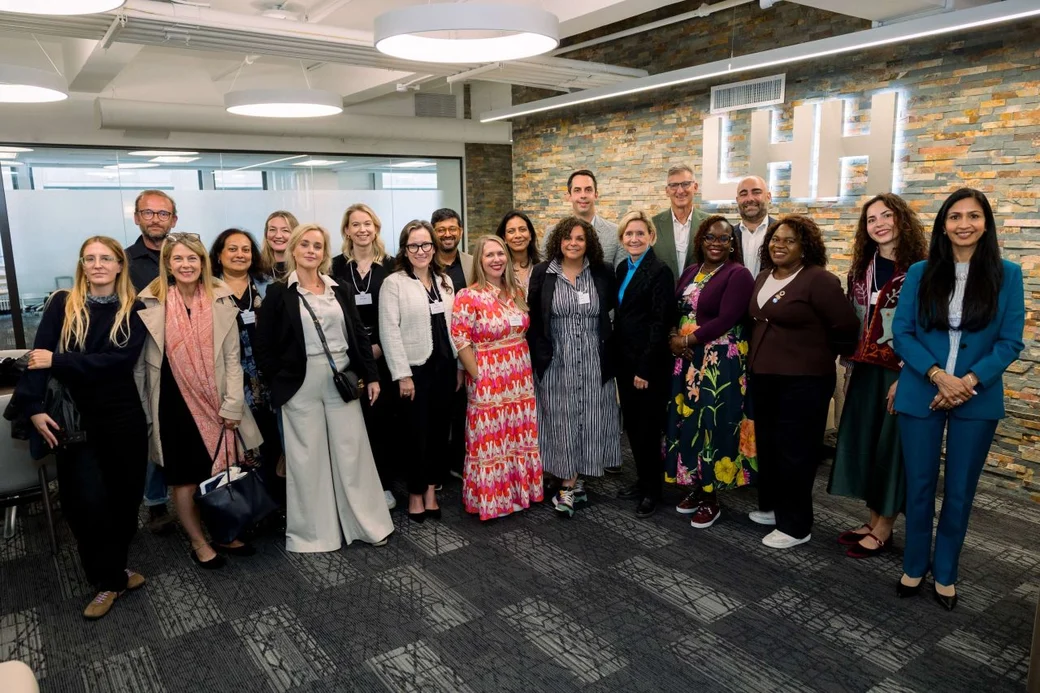
The New York visit also provided valuable time with leadership from several of the Foundation’s collaborating organizations, including some of the world’s top incubators, accelerators, and social enterprise support programs. These conversations are always among the most energizing of the year and serve as a reminder of how much the ecosystem has grown.
From New York, Isis traveled to France to present at the Lex Mundi General Counsel Summit. Speaking to general counsel from leading corporations around the world, Isis highlighted the commitment of Lex Mundi member firms to using their legal expertise to advance positive social impact. Her remarks offered attendees a different perspective on the firms they work with regularly, highlighting the meaningful contributions these firms make beyond their commercial practices. The presentation was warmly received and helped raise awareness of the Foundation’s work among this important audience.
Across both trips, the conversations reinforced something the Foundation has long believed: the ecosystem supporting social entrepreneurs is growing, and the organizations working within it are increasingly aligned around shared goals. The Foundation is proud to be part of that community and looks forward to continuing to build on these relationships in the months ahead.
 For people with print disabilities and other reading-related challenges, access to books and information can depend on whether content is available in a format that meets their needs. As technology continues to create new ways to read and share information, organizations working in the accessibility space are helping to make sure those advances reach the people who need them most. Over the years, the Lex Mundi Pro Bono Foundation has supported organizations at the forefront of this work, connecting them with legal expertise as they turn innovative ideas into accessible reading solutions.
One such organization is Adaptive Reader, a startup that transforms books into AI-powered, multilingual and leveled editions that combine the cognitive benefits of print with the accessibility of digital and audio formats. Through the Foundation, one of the United States’ leading intellectual property attorneys provided Adaptive Reader with guidance on copyright and accessibility law questions relevant to accessible publishing. The legal support has helped the company navigate a complex legal landscape as it works to expand access to books for readers with disabilities.
For an early-stage, mission-driven company, access to this level of legal expertise was significant. “The Lex Mundi Pro Bono Foundation gave Adaptive Reader access to world-class legal expertise that would otherwise have been financially out of reach,” said Ethan Pierce, Founder and CEO of Adaptive Reader. “Without that support, we may never have been able to pursue this important part of our mission with the same clarity and confidence.”
Adaptive Reader is part of a broader community of organizations using technology and innovation to make reading more accessible. Another longtime Foundation client, Benetech, has been a leader in accessible reading and learning for 25 years. More than two decades ago, Benetech launched Bookshare, the world’s largest online library of accessible reading materials, serving people with print disabilities in more than 50 countries. Lex Mundi attorneys have supported Benetech for over a decade, helping with projects ranging from negotiating contracts with publishers to supporting the organization’s expansion into new countries.
The Foundation has also worked with BeeLine Reader, an award-winning technology company whose tools are designed to make reading on screens easier and more accessible, particularly for people with dyslexia, ADHD and vision impairments. Member firms have helped BeeLine Reader protect its intellectual property and draft licensing agreements as it has expanded its work with major multinational companies. BeeLine Reader is also preparing to launch a partnership with Adaptive Reader that will allow readers to order Adaptive Reader’s printed books with BeeLine’s accessibility-focused formatting, further expanding accessibility options available to readers.
While their approaches differ, Adaptive Reader, Benetech and BeeLine Reader share a common goal: using innovation to help make books and information more accessible to people who might otherwise face barriers to reading. The Foundation is grateful to the Lex Mundi member firms that have supported Adaptive Reader, Benetech and BeeLine Reader over the years, including: Arthur Cox (Ireland and Northern Ireland); Calfee, Halter & Griswold LLP (USA, Ohio); Morrison Foerster LLP (USA, California); Romulo Mabanta Buenaventura Sayoc & De Los Angeles (Philippines); and Shardul Amarchand Mangaldas & Co (India). By sharing their expertise with these companies, Lex Mundi attorneys are helping to bring the benefits of reading to millions of people globally.
 Twenty years ago, the founders of the Lex Mundi Pro Bono Foundation asked a simple but far-reaching question: What would it look like if the extraordinary legal talent within the Lex Mundi network were turned toward the world’s most urgent problems?
At the time, the answer was far from obvious. Pro bono legal work was largely focused on traditional legal aid, with individuals in crisis as primary clients. Transactional legal support for mission-driven organizations was limited, particularly outside Western markets, and social entrepreneurs were rarely part of the pro bono conversation.
The Lex Mundi Pro Bono Foundation set out to change that. Established in 2006, the Foundation focused exclusively on providing transactional legal support to social enterprises and nonprofits, building a model that could connect organizations with leading independent law firms across jurisdictions. The goal was not simply to provide free legal services, but to make sophisticated legal expertise accessible to organizations working to address some of the world’s most pressing challenges.
Twenty years later, the Foundation’s first-ever independent impact assessment offers an opportunity to look at what that idea has become. The findings will be highlighted in the Foundation’s Impact Report.
Since 2006, 138 Lex Mundi member firms have worked alongside nearly 1,400 social enterprises and nonprofits on more than 3,000 legal matters across 120 countries. Together, these engagements represent an estimated $90 million in pro bono legal services.
That figure captures the scale of the Foundation’s work. But the impact assessment also reveals just how critical that support has been to the organizations receiving it.
Ninety-two percent of clients said equivalent legal support would have been inaccessible, difficult to obtain, or available only at significant cost. Clients gave the Foundation a 9.4 out of 10 Net Promoter Score, reflecting the value they place on the support they received.
The benefits also extend to the firms and organizations that make this work possible. Ninety-three percent of participating firms identified institutional benefits beyond individual matters, including lawyer development, cross-border experience and stronger pro bono practices. Additionally, the incubators, accelerators, and other partners who refer clients (“Collaborators”) gave the Foundation a 9.7 out of 10 Net Promoter Score, with 94 percent identified as promoters and no detractors. Every Collaborator that used the Foundation for its own legal needs said the experience reinforced its confidence in referring other organizations.
Together, these findings offer more than a measure of the Foundation’s past 20 years. They demonstrate what the Lex Mundi network has helped make possible. The Foundation does not claim sole credit for the broader transformation of pro bono over the past two decades. But the model it pioneered, and what the Lex Mundi network demonstrated through it, helped expand the way the legal profession thinks about what pro bono can be and who it can serve.
The Foundation enters its third decade with a clearer understanding of the difference this work can make and a strong foundation for what comes next. The upcoming Impact Report will explore these findings in greater depth, offering a fuller picture of the work, the people and organizations behind it, and the impact created over two decades.